

If you’ve spent any time in the wellness world lately, chances are you’ve heard about glutathione. It’s popping up in supplements, skincare, longevity protocols, beauty conversations, and social media feeds, often accompanied by some pretty lofty promises. But while glutathione may be having a moment, the antioxidant itself is anything but new.
“Our bodies have depended on glutathione from the beginning,” says Chervin Jafarieh, co-founder and chief scientific officer of Cymbiotika. “The modern human is being asked to process an incredible amount—environmental pollution, depleted food, alcohol, medications, disrupted sleep, and persistent emotional stress.”
That combination of increased interest in longevity, cellular health, detoxification, athletic recovery, and glowing skin has helped propel glutathione from relative obscurity into the wellness spotlight. So, what does it actually do, and should we all be trying to get more of it?
Meet the “Master Antioxidant”
Glutathione is an antioxidant that our bodies produce naturally from three amino acids: glutamine, cysteine, and glycine. It is found throughout the body and plays an important role in protecting cells from oxidative stress.
“Glutathione is one of your body’s main antioxidants,” says Carly Carnelli, RD, MPH, medical education specialist, consumer and retail, at Thorne. “It helps protect your cells from everyday ‘wear and tear’ of oxidative stress caused by things like illness, exercise, pollution, alcohol, and other environmental exposures.”
It also has a particularly interesting superpower: Glutathione helps recycle other antioxidants, including vitamins C and E, so they can continue doing their jobs. That’s part of the reason glutathione has earned its catchy “master antioxidant” moniker, although Jafarieh thinks the nickname can sometimes oversimplify what is actually happening. “It helps protect the integrity of the cell,” he says. “The liver uses it throughout its natural clearance pathways, and it helps regenerate other antioxidants after they’ve been used.”
Dr. Nayan Patel, founder and CEO of Auro Wellness and Auro Skincare and author of The Glutathione Revolution, has spent decades studying the antioxidant. He points to glutathione’s role in protecting DNA, proteins, and cell membranes from cumulative oxidative damage and supporting the body’s broader antioxidant network. The hitch? Our ability to maintain glutathione doesn’t necessarily remain constant throughout life. Aging is associated with changes in glutathione status, while chronic stress, poor diet, alcohol consumption, smoking, inadequate sleep, and environmental exposures can increase oxidative stress and place greater demands on the body’s antioxidant systems. In other words, modern life isn’t exactly doing our glutathione any favors.
Why Glutathione Is Suddenly Everywhere
Glutathione happens to sit at the center of several of today’s biggest wellness obsessions: longevity, healthy aging, skin health, environmental exposure, recovery, and cellular wellness. “I think glutathione is trending because it sits at the intersection of several big wellness interests,” says Carnelli, pointing to healthy aging, skin glow, liver detoxification support, environmental toxin exposure, athletic recovery, and antioxidant support.
Beauty has also played a major role in glutathione’s newfound fame. Social media has helped popularize glutathione for brighter-looking skin and pigmentation concerns, while longevity podcasts and wellness influencers have brought concepts like oxidative stress and cellular health into mainstream conversation.
That visibility isn’t necessarily a bad thing, but it can blur the line between legitimate science and wellness-world hyperbole. “I’m happy it’s getting attention, but I don’t want it reduced to another wellness buzzword,” says Jafarieh. “Glutathione isn’t some magical substance that detoxes the body for you. It supports the biological pathways the body already uses.”
That distinction is important. Glutathione isn’t a cleanse, and taking it doesn’t magically erase a weekend of cocktails, four hours of sleep, and a diet consisting primarily of takeout. Instead, it is part of the body’s existing antioxidant and cellular defense systems.
To Ingest or to Apply?
This is where the glutathione conversation gets particularly interesting and considerably more complicated. Glutathione can be supplemented orally and applied topically, but even saying you take glutathione doesn’t tell the whole story. A traditional pill or capsule, a sustained-release supplement, and a liposomal formulation may all contain glutathione, but they don’t necessarily deliver it in the same way. And when it comes to glutathione, delivery is a big part of the conversation.
The Problem With the Pill
When conventional oral glutathione enters the digestive tract, it faces stomach acid and digestive enzymes, and some can be broken down before being absorbed. Its component amino acids can then be used by the body to synthesize glutathione internally. That has historically raised questions about the bioavailability of standard oral glutathione. However, it’s important not to leap from “absorption can be challenging” to “oral glutathione doesn’t work.” Human studies have shown that oral supplementation can increase glutathione status, and newer research suggests the formulation itself can significantly affect systemic exposure.
Supplement companies have responded with different technologies intended to protect glutathione during digestion or improve how it is delivered. Thorne, for example, uses a sustained-release approach with its Glutathione-SR, which provides 175 mg of reduced glutathione in a formulation designed to protect it from stomach acid and digestive enzyme breakdown and release it more gradually.
The Liposomal Difference
Liposomal glutathione takes another approach entirely. Rather than simply delivering glutathione as a conventional tablet or capsule, liposomal technology surrounds the ingredient within tiny structures made from phospholipids, which the same class of molecules that makes up an important part of our own cell membranes. Think of it as giving a somewhat delicate passenger a protective vehicle for its journey through the digestive system.
“Glutathione is a fragile molecule,” says Jafarieh. “When you take it in a conventional oral form, the digestive environment may break down a meaningful amount before the body has the opportunity to use it. That’s where a properly formed liposome becomes valuable.”
There is research supporting liposomal glutathione as a promising delivery method. In a small 2018 pilot study of 12 healthy adults, daily liposomal glutathione supplementation increased glutathione levels in red blood cells, plasma, and immune cells. More recent research has also demonstrated that enhanced oral formulations can produce substantially different results than standard glutathione.
A 2026 human study comparing a specific liposomal formulation with plain glutathione, for example, found significantly greater systemic availability with the liposomal product, although the study was small and evaluated one particular formulation rather than liposomal glutathione as a category. And that last point matters. Not everything marketed as “liposomal” is necessarily created equal. “It isn’t glutathione stirred into lecithin and poured into a bottle,” says Jafarieh. “The presence of phospholipids on an ingredient panel does not prove that an actual liposome was formed.”
Cymbiotika has also tested its own glutathione in a randomized, double-blind human study with multiple blood draws over 24 hours. According to Jafarieh, its formula produced approximately three times the exposure of an equal-dose comparator. For him, that gets to an important point about shopping for glutathione—or really any supplement in which absorption is a concern. “Milligrams only tell you what was placed inside the product,” he says. “They don’t tell you what survive digestion or became available to the body.”
In other words, the biggest number on the bottle may not necessarily indicate the best-delivered product.
And liposomal technology isn’t the only potential solution. A recent randomized crossover trial comparing standard, liposomal, and a specific micellar glutathione formulation found significant differences in systemic exposure among formulations, further suggesting that the delivery system—not simply the amount of glutathione listed on the label—can matter.
That said, there is an important reality check. Better bioavailability is not automatically synonymous with better long-term health outcomes. A recent review of glutathione research concluded that advanced delivery systems may improve stability and systemic availability, but we still need more evidence demonstrating that those pharmacokinetic advantages translate into meaningful clinical benefits. So, yes, how you take your glutathione matters. But science hasn’t crowned one universal winner just yet.
Then There’s the Skin Route
Patel takes a different approach altogether: bypassing the digestive tract. “When we talk about glutathione, the real difference between ingesting it and applying it topically comes down to how each one gets it into the body, and how much of it actually ends up where it’s needed,” he says.
Using his pharmaceutical expertise and research into oxidative stress, Patel developed the patented Auro GSH Antioxidant Delivery System, which is designed to enhance the topical delivery of glutathione and other bioactive ingredients through the skin. The technology powers his Auro Wellness and Auro Skincare lines.
Patel points to clinical research involving a specially formulated glutathione-cyclodextrin nanoparticle complex. In a study of 30 healthy participants, researchers applied either the topical glutathione formulation or placebo for three days and measured glutathione and oxidative-stress biomarkers, among other outcomes. The study found evidence that the specially formulated glutathione was absorbed topically and affected measured biomarkers.
For Patel, that makes topical application particularly compelling.
“If I had to pick one, I’d choose topical application for its more direct, consistent support,” he says, while also recommending consuming the amino acids the body needs to produce its own glutathione through diet. His Auro Skincare line applies that technology specifically to skin health, where the brand has coined the term “Glutathione Glow” to describe the brighter, healthier-looking, more radiant complexion it aims to support.
It’s certainly a concept made for our glow-obsessed moment. But there is an important distinction here, too. Evidence that a specially engineered topical delivery system can transport glutathione through the skin doesn’t mean that every serum or moisturizer with glutathione on its ingredient list will do the same thing. “The skin is designed to keep things out,” says Jafarieh. “Simply putting glutathione into a cream doesn’t mean it will remain stable or penetrate deeply enough to be useful.”
Once again, formulation matters.
What About the Glow?
Of course, we can’t talk about glutathione’s current popularity without talking about skin. Oxidative stress is one contributor to visible skin aging, and glutathione’s role in the antioxidant system has made it increasingly interesting to the skincare and beauty-from-within worlds.
“Skin is one of the more visible places where glutathione’s effects show up,” says Patel. “Glutathione plays a direct role in protecting skin cells from that kind of oxidative stress damage.”
Research has also investigated glutathione’s potential effects on pigmentation and skintone, but results vary according to dose, formulation, delivery method, and study design. A systematic review found some evidence for effects on skin color while also noting limitations in the available studies, particularly surrounding oral bioavailability. Translation: There’s enough there to make glutathione interesting, but perhaps not enough to crown it the miracle “glow” ingredient social media sometimes makes it out to be.
Jafarieh takes a similarly measured view. “There is also research around pigmentation, although I think we need to be honest that the science is still developing,” he says.
So, glutathione may have earned a legitimate place in the beauty-from-within conversation, but expectations should remain realistic.
How to Incorporate It
For those interested in oral glutathione, timing doesn’t need to become another wellness ritual to obsess over. Jafarieh personally prefers taking it in the morning, either on an empty stomach or away from a heavy meal, but says consistency is more important than finding a supposedly perfect time.
Oral glutathione is generally well tolerated, although some people may experience mild digestive issues, such as bloating, cramping, nausea, or loose stools. Carnelli recommends trying it with food and sticking to the recommended serving if you’re particularly sensitive.
As with any supplement, people who are pregnant or breastfeeding, undergoing cancer treatment, managing a serious health condition, taking medications, or who have other medical concerns should talk with their healthcare provider before adding glutathione to their routine.
And don’t expect an immediate jolt of energy that announces, Hey! Your glutathione is working! “Glutathione isn’t a stimulant,” says Jafarieh. “You’re not taking it for a sudden rush.”
He suggests giving supplementation four to eight weeks of consistent use before assessing your individual response.
The Foundation Still Matters
Perhaps the least glamorous part of the glutathione trend is also the most important: You can’t supplement—or slather—your way out of habits that continually work against your health. The body needs adequate protein and nutrients to produce glutathione in the first place, and sleep, stress, alcohol consumption, smoking, diet, and environmental exposures all factor into the larger oxidative-stress equation. “The least effective approach, in my experience, is expecting a supplement to make up for habits working against it: poor sleep, high stress, drinking, or a low-quality diet,” says Patel.
Jafarieh agrees. “The supplement supports the terrain,” he says. “It doesn’t replace the foundations.”
And maybe that’s the best way to look at glutathione altogether. Yes, it’s trending. Yes, the science behind its role in the body is compelling. And yes, evolving delivery technologies are making it an intriguing addition to both wellness and skincare routines.
But despite its superhero nickname, glutathione isn’t coming to rescue us from our own bad habits. Instead, think of it as one important member of an incredibly complex cellular support system, one that has quietly been working behind the scenes all along. The “master antioxidant” may finally be having its star turn, but when it comes to glutathione, a supporting act might actually be the more accurate—and more impressive—role.
Thinking of adding glutathione to your supplement stack? Here are three options our editors have tested.
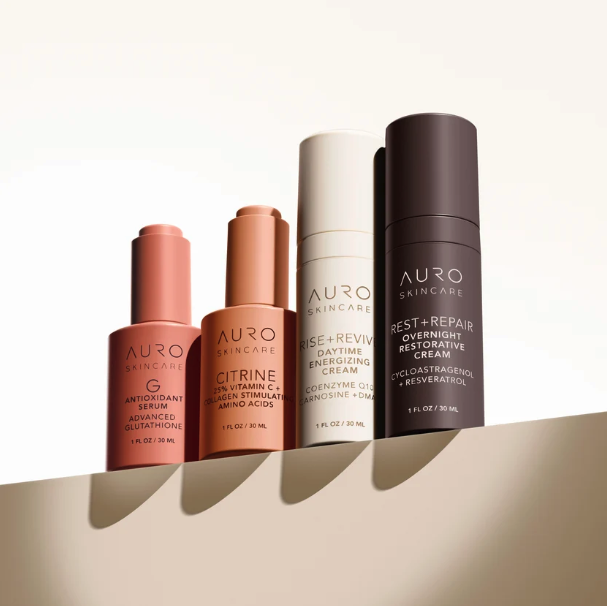
Auro Wellness Complete Protocol ($625)
For those looking to take glutathione straight to the skin, Auro Wellness’ Complete Protocol builds an entire skincare routine around the antioxidant. The four-product collection uses the brand’s patented Auro GSH™ Antioxidant Delivery System and includes its high-potency G Antioxidant Revitalization Serum alongside Citrine Vitamin C Radiance Complex, Rise + Revive Daytime Energizing Cream, and Reset + Repair Overnight Regenerating Cream. Glutathione appears throughout the regimen, paired with complementary ingredients including vitamin C, CoQ10, carnosine, DMAE, hyaluronic acid, and squalane to target oxidative stress while supporting hydration, firmness, radiance, and overall skin health. In a four-week clinical study of 25 women ages 36 to 67, the protocol was shown to improve the appearance of radiance in as little as one week, with participants also reporting improvements in skin smoothness, softness, strength, and overall healthy appearance after four weeks.
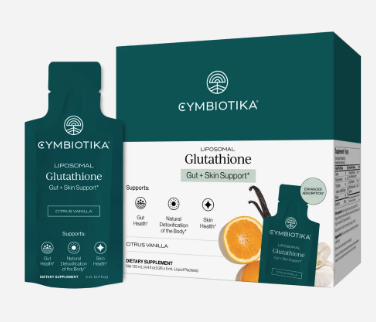
Cymbiotika Liposomal Glutathione ($61.60)
Cymbiotika’s glutathione uses reduced glutathione combined with a phospholipid-based liposomal delivery system designed to help protect the antioxidant as it moves through the digestive tract and improve its absorption. The formula also includes CoQ10 in its active ubiquinol form, PQQ, and riboflavin for additional antioxidant and cellular-energy support. According to Cymbiotika, a randomized, double-blind crossover pharmacokinetic study of its formula found approximately three times greater absorption compared with a standard formulation, as well as a 50 percent increase in blood glutathione levels from baseline following a single dose. The product comes in individual liquid pouches and is designed to be taken on an empty stomach, making it an interesting example of how newer delivery technologies are attempting to overcome some of the limitations associated with traditional oral glutathione supplements.
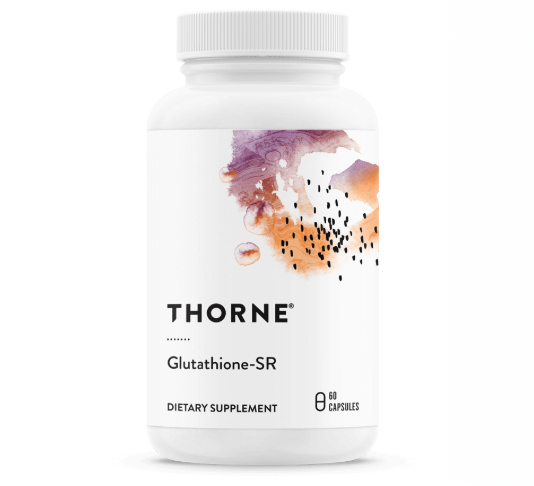
Thorne Glutathione-SR ($54)
Another approach to improving oral glutathione delivery comes from Thorne with its Glutathione-SR. Rather than using a liposomal delivery system, the supplement provides glutathione in a sustained-release form designed to deliver it gradually over an extended period. Thorne positions the formula as a way to support the body’s antioxidant defenses, with benefits for the liver, brain, heart, lungs, and eyes, as well as recovery from physical activity. The product is also NSF Certified for Sport, meaning it has undergone independent testing for substances prohibited in competitive sports. For consumers who prefer a capsule over a liquid or liposomal formula, Glutathione-SR offers another strategy for supplementing this important antioxidant.


