
I read the news the same week everyone else did. The EPA had approved two new pesticides for use on the two biggest crops grown in this country. Here we go again, I thought. More of the same.
I have spent years growing food outside that system, and this is the part where I tell you why.
The Wake-Up Call Was My Own Blood Pressure
At 35, my doctor told me I needed blood pressure medication for the rest of my life. I said not happening.
That medication would have managed a symptom. It would have ignored the actual cause of my high blood pressure completely, and it came loaded with side effects I had no interest in carrying for decades. I called it what it was: a band-aid over the real problem.
So, I started growing food instead. Real greens. Collard greens, specifically, juiced three times a day. My skin changed first. Then my weight. Within months, my blood pressure had dropped 40 points.
I had zero agricultural background and almost no land, so I built an aquaponics system: a closed loop where fish waste feeds the plants, and the plants clean the water for the fish. It was incredible to watch it work. That system taught me more about soil and nutrition than any doctor’s office ever did. We are dirt. We need dirt in our bodies.
What the EPA Just Approved, and Why It Doesn’t Surprise Me
On June 30, 2026, the EPA cleared two new herbicides, Diflufenican and Epyrifenacil, for use on corn and soybeans, the two most widely planted crops in the country. Environmental groups argue both compounds break down into persistent forever chemical byproducts, though the EPA disputes that these specific chemicals meet the technical definition of PFAS.
Here is my honest reaction to that kind of news: the idea that we can keep engineering chemicals to outsmart pests better than nature already does is, frankly, offensive to me. Miles and miles of a single crop is guaranteed to invite severe pestilence. Nature runs on biodiversity instead, a web of interconnected species that solves the pest problem on its own, without a single spray.
Spray poison across everything, and somehow the same chemicals that kill pests and animals are supposed to be safe for us to eat. They are not, and that is a big part of why so many of us are sick right now. It is convenient, too, because look at who else is selling the cure. The same industries producing these agrochemicals often own or partner with pharmaceutical companies. Shocker. They are building their own web: a web of unwellness. And the farmers cheer.
Here is the bigger issue as I see it: a for-profit system that makes medicine with one hand to treat ADHD, autism, dementia, cancer, diabetes, and autoimmune disease shouldn’t be making the chemicals linked to causing those same conditions with the other hand. Any person paying attention can see that is a conflict of interest of the highest order. Whoever’s hands are in the cookie jar, whether it is campaign contributions or research funding, should not be the one refereeing food safety.
This is the pattern that gets me every time. A monoculture creates a pest problem. Industry proposes a chemical fix. Regulators approve it. A new problem eventually shows up, and the cycle starts over.
The Part of Glyphosate Most People Never Hear About
It is routine, it is pervasive, and it leaves residue on food most people eat every single day. That alone should bother more people than it does.
Most conversations about glyphosate focus on weed control during the growing season. A significant share of dietary exposure actually comes from something most people have never heard of—pre-harvest desiccation. Farmers spray glyphosate on wheat, oats, and other grains shortly before harvest to dry the plants faster and make the crop easier to combine. That timing means the chemical lands close to harvest, which leaves higher residue in grain that eventually becomes cereal, bread, and flour.
The EPA allows glyphosate residue up to 30 parts per million on treated grain, and the practice is legal and common in colder growing regions. If you are avoiding a crop for how it is grown, it is worth knowing it might still carry residue from how it was harvested.
Why I Stopped Trusting the Organic Label Alone
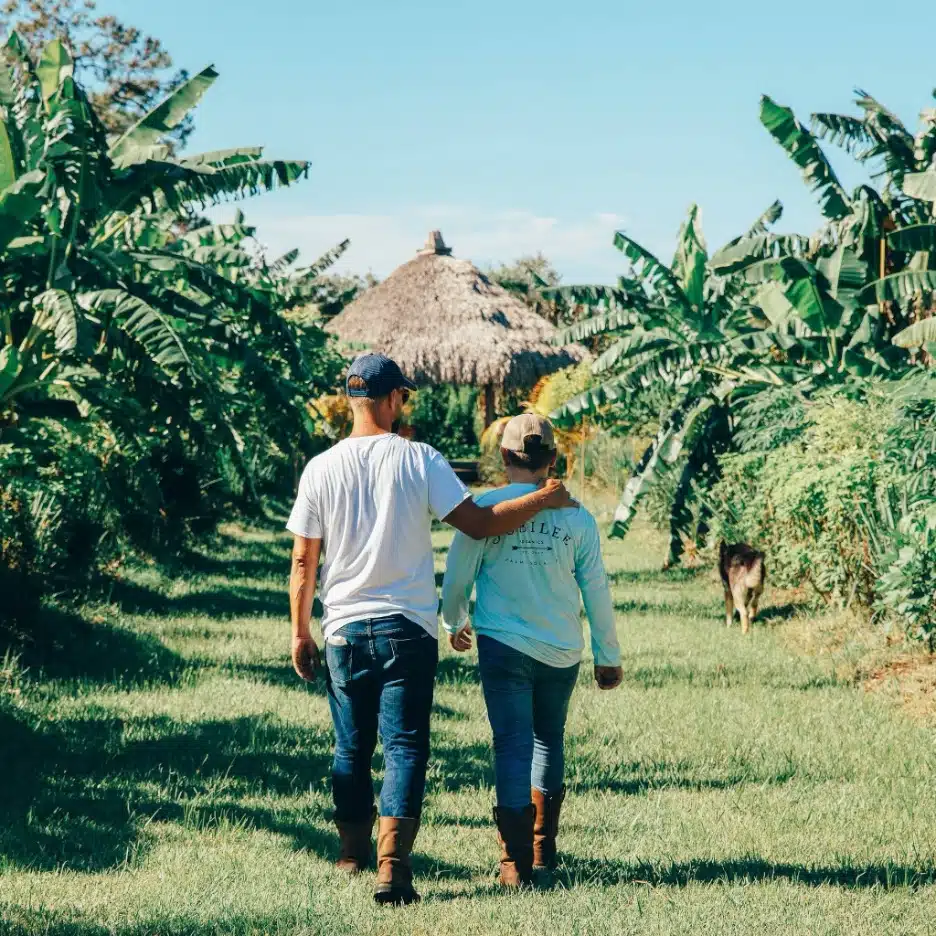
Jubilee sits on land that was a tomato field back in the 1950s. It sat fallow, growing nothing but grass, for 50 years before I started farming it. We have never sprayed a single chemical on the food forest and orchard since. We let nature take its course, and honestly, I have never felt the need to test for residue. There isn’t any to find.
We went through certified organic certification anyway, because that is what most customers look for. Going through that process was disillusioning. I was genuinely disgusted by how many synthetic inputs are still permitted under the organic label. Organic is a real step up from conventional farming, and I still think of it as a floor to build up from. Jubilee tries to build well past it.
The label I use now is beyond organic, which is really just my own name for regenerative agriculture and permaculture. Instead of asking which synthetic inputs are approved, it asks how to work within nature’s own system so almost nothing synthetic is needed at all: no pesticides, no synthetic fertilizers, high-density planting, and biomass we grow specifically to chop down and drop right back into the soil it came from.
Conventional agriculture will tell you that you cannot feed a country that way. My answer is that we have not actually tried, because everyone involved is making too much money doing it the current way.
Machete Days and Chop and Drop
Our main activity most days is pruning: machete, pruners, pole saws. We are fruit farmers, so the rhythm looks different from a row-crop operation. We harvest biomass through a method called chop and drop. We grow it specifically to cut it down, and let it feed the soil right where it falls.
It is mango time as I write this, and the flavors coming off this land still surprise me. I can bite into one of our bananas and taste orange, lemon, pineapple, and banana all in one piece of fruit. That is what happens when soil is actually alive. It is local, it is seasonal, and I would argue that is the design for a human diet. Probably for animals too, honestly.
The hardest part of farming this way is fighting the urge to make it all about money. This is a boutique way of growing. It is intimate, and the quality is unmatched, but the math is brutal. Organic vegetables cost far more to grow than conventional ones because you are in hand-to-hand combat with every pest, by hand, with no shortcuts. The end user absorbs those costs, though honestly, I do not charge nearly what I should.
Where to Start If You Want More Control Over Your Food
Grow something. That is genuinely where I would tell anyone to start, whether you have a full acre or an apartment with one sunny windowsill. Do not hand your entire food supply over to corporate America without a fight. You do not need 12 acres or a farming background to begin:
- Plant a few herbs or hearty greens in a grow box on a patio or balcony.
- Add one fruit tree suited to your climate if you have any yard space at all.
- Visit a local farmers market, and ask the grower directly how the food was raised.
- Learn which crops in your region are commonly desiccated with glyphosate before harvest, and look for growers who skip that step.
Herbs, fruit trees, hardy greens in a grow box: all of it is doable. Grow something.
What Would Actually Change Things
Individual choices add up, and pairing them with two shifts at the policy level would move things much faster:
- Direct funding and low-barrier financing for small and beginning regenerative farmers. Most cannot get near the capital conventional operations take for granted, and that needs to change.
- Wider, better-supported farmers markets. Go to Europe, and you will see they are just a normal part of weekly life. Here, they are still treated like a niche.
Give a new generation of small farmers real resources to start, and food access could shift within a single generation. The grocery store, as it is currently built, has not done us any favors. But that is a longer conversation for another day.
The Takeaway
Most conventional farmers are doing the best they know how inside a system that rewards scale over health. Modern agriculture and scientific advances have earned a place when they strengthen soil health over the long run. What I cannot get past is a system where the same industries that profit from treating chronic illness also profit from selling the chemicals linked to causing it. Whatever the EPA approves next, the healthiest response I know of is still the one I stumbled into at 35: grow something, know where your food comes from, and pay attention to what your body is telling you.
Sources
- DTN, 2026: EPA Approves Herbicides to Combat Waterhemp, Palmer Amaranth in Commodity Crops
- Center for Biological Diversity, 2026: Trump EPA Approves Two More “Forever Chemical” Pesticides for Use on Most Widely Grown U.S. Crops
- EcoWatch, 2022: Why Is Glyphosate Sprayed on Crops Right Before Harvest?
- CropFarming.org, 2026: Are Oats Sprayed With Roundup? Truth About Glyphosate