SPONSORED CONTENT
This piece of sponsored content was provided by the Wellness Tourism Association.
It was not written, edited, or curated by the Well Defined editorial team.
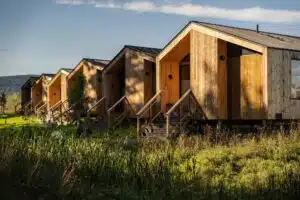
Palazzo di Varignana, tucked into the rolling hills outside Bologna, offers traditional holistic wellness programs, a serene setting, a spa with spiritually inspired treatments, and menus with locally sourced ingredients. What distinguishes the resort, however, is—quite literally—the ground beneath it. The resort incorporates a long-term reclamation of abandoned farmland and rural buildings, an agricultural revival that shapes both the guest experience and the surrounding landscape.
Set within more than 650 hectares of vineyards, olive groves, lakes, gardens, and restored farmhouses, Palazzo di Varignana feels less like a single destination and more like a small ecosystem. While guests encounter the familiar markers of a high-end Italian resort—seven outdoor pools, yoga sessions, and a sprawling 43,000-square-foot spa—the property’s deeper story unfolds beyond the spa walls, across fields once left fallow.
“Every olive tree planted, every ruin brought back to life, every experience lived here is part of a great project: to give back to the territory more than we receive,” says Carlo Gherardi, founder of Palazzo di Varignana. “The goal has always been to give back to the territory more than we receive, so that its beauty becomes a shared heritage.”
That philosophy has guided the estate since its agricultural project began in 2015. This agricultural backbone informs nearly every aspect of the guest experience. Dining at Palazzo di Varignana is not treated as a standalone indulgence, but as an extension of the land itself. Ingredients served across the resort’s restaurants are drawn heavily from the surrounding fields or sourced from nearby producers, reflecting a commitment to seasonality and traceability.
“Each dish is born from the encounter between zero-kilometre ingredients grown at Palazzo di Varignana and carefully selected products from the best local suppliers,” adds Francesco Manograsso, head chef at Il Grifone.
At the Ginkgo Longevity restaurant, menus are designed around principles of functional nutrition. Dishes are anti-inflammatory, gluten- and dairy-free, and avoid refined carbohydrates.
Functional nutrition powers Acquaviva Method retreats at Palazzo di Varignana, which include traditional yoga and detox retreats but also more trending ones, such as deep sleep and longevity. Beyond the structured retreat programs, the estate encourages slower, quieter forms of engagement. Guests can wander through what is considered one of Italy’s 100 most beautiful gardens, explore walking paths between vineyards and olive groves, or sit with the view of restored hillsides where neglected crops once faded from use.
What makes Palazzo di Varignana unusual is not that it offers luxury, but that its luxury feels secondary to its stewardship. The resort’s buildings, many reclaimed from abandoned rural structures, retain a sense of place that resists homogenization. Rather than erasing agricultural history, the estate has amplified it, allowing restored farmhouses and working fields to coexist with contemporary hospitality. This long view of land, people, and health as interconnected places Palazzo di Varignana at an interesting intersection within the global wellness landscape. While many resorts focus inward, emphasizing escape from daily life, this one draws attention outward, to the terrain and traditions that sustain it.
In an era when wellness travel can feel increasingly abstracted from place, Palazzo di Varignana offers a reminder that restoration often begins with what already exists. By reclaiming farmland, reviving ancient crops, and integrating agriculture into hospitality, the estate suggests that well-being is not only something to be consumed, but something to be cultivated, patiently, over time.